

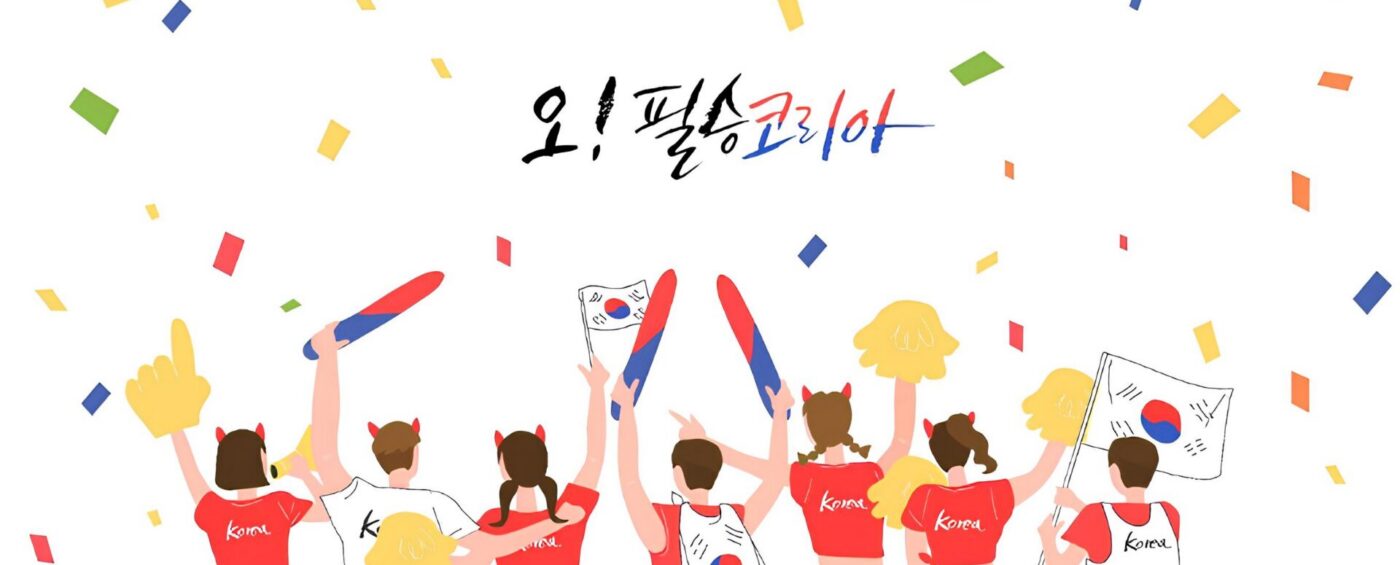
The 2026 FIFA World Cup is underway, bringing fans together across the globe. Just like we gather at local hawker centers or pubs in Singapore, football matches are a massive social event in South Korea. For Koreans, watching a big game is less about the technicalities of the sport and more about the communal experience of cheering together. You do not need to be in Seoul to feel this camaraderie. By understanding a bit of the language and traditions behind their football culture, you can easily join the celebration right here in Singapore.
If you watch a match with Korean fans, you will immediately notice the sea of red shirts and perfectly synchronized chants. This passionate community of supporters is known as the Bulgeun Angma (Red Devils). This cheering culture became a national phenomenon during the legendary 2002 World Cup, co-hosted with Japan. As the underdog national team made a historic run to the semi-finals, millions of everyday citizens flooded public plazas to watch the games on giant screens. It transformed football into massive block parties and became a tradition that remains a huge part of Korean culture today.
You do not need to be a lifelong football fan to participate, as the crowd’s energy is driven by simple cheers that anyone can pick up in seconds. The most iconic chant is “Dae-han-min-guk” (대한민국 – Republic of Korea). Paired with a 5-beat clap, it beautifully highlights the rhythmic, syllabic nature of the Korean language. Shouting these four syllables is an instant way to feel part of the crowd. Try using this simple vocabulary during the next match:
- Hwaiting (화이팅): Meaning “Let’s go” or “Good luck,” it is the ultimate phrase of encouragement.
- Gaja (가자): Meaning “Let’s go!” for when the team pushes toward the goal.
Cheering for hours requires energy. To keep spirits high late into the night, Korean fans rely on a very specific, delicious match-day ritual. In Singapore, we love our late-night prata while watching a game with friends. In South Korea, the undisputed favorite match-day supper is Chimaek.
A clever combination of Chikin (치킨 – Fried Chicken) and Maekju (맥주 – Beer), Chimaek is a cultural staple. During the World Cup, it is an absolute must-have. Friends and family gather around crispy chicken and cold drinks, and sharing this meal is considered just as important as the match itself. Want to replicate this experience at a Korean restaurant in Singapore? Here are a few practical phrases for your next viewing party:
- Geonbae (건배): Cheers!
- Masi-sseo-yo (맛있어요): It’s delicious! (Great for impressing the staff).
- Han jan deo ju-se-yo (한 잔 더 주세요): One more glass, please. (Perfect for extra time!)
Learning these cultural tidbits and sharing them with friends makes watching a match much more enjoyable. It proves that language learning is truly about connecting with people, building community, and having fun with the things you already enjoy.
If discovering these traditions sparks your curiosity, why stop at the final whistle? Learning the Korean language opens the door to understanding the culture on a much deeper level. It empowers you to do everything from making new friends in Seoul to ordering your favorite authentic food with total confidence.
Ready to go beyond the basics? Discover how our Korean language courses can help you speak, connect, and celebrate like a local today.
Written by: Ms Park Youn Ha, July 2026